
 |
REVIEW: THE POWER TO DREAM ALOUD
Joyce immersed herself in challenges that are endemic to producing one's first record: technical production, arrangement, comfort and style. Valerie's decision to showcase range and ability produced mixed results but will, in the long term, greatly benefit the musician. Valerie Joyce can write. "Oasis," the first of four original songs within, represents fundamental penmanship. On "Silent Sky," Valerie's voice stirs like a breeze off Seattle's Puget Sound in a state of mind that undoubtedly prevailed when she penned this song. The composition's endearing simplicity casts optimism on the integrity of the idea. On "Orchid," Joyce pursues her vocals the power of quietude. On "Christmas Eve," we hear the first overt studio effects and they enhance the nostalgic feel of vocal-piano duet. In a future incarnation, one bets that Joyce would imbue this arrangement with strings. Time will bring a welcome complexity to Joyce's future writings. Reverie is rooted in a sparse and, therefore, limited sonic sensibility.
When one possesses the pipes, as Valerie Joyce does, studio effects can
be tastefully employed to powerful ends. Such indulgence would have enriched
not only the fundamental effects of instruments such as saxophone, flugel
horn and flute, but the players' opportunities to maximize those machinations.
This kind of playing could generate an aural environment with more affected
post-production. As Joyce relaxes, so will her arrangements. Reverie is an adept entry to the artistic continuum of recording.
Valerie Joyce must now cast her rich timber in different aural contexts
in order to diversify her vocal talent. A drier, less airy, delivery would
prompt a more purely improvised, spontaneous incantation. Valerie can
also look forward to the learning curve that inevitably accompanies studio
production experience.
|
© 2002-2009 - Valerie Joyce | Design by Origin Web Design |
 Valerie
Joyce is a talented composer and musician for whom much opportunity exists.
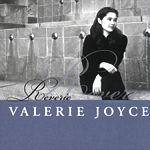
Her debut album, Reverie, is a competent step into jazz recording.
The brightest light for the Seattle resident is her voice, a resonant
wisp of serenity that can be massaged for power and effect.
Valerie
Joyce is a talented composer and musician for whom much opportunity exists.
Her debut album, Reverie, is a competent step into jazz recording.
The brightest light for the Seattle resident is her voice, a resonant
wisp of serenity that can be massaged for power and effect.